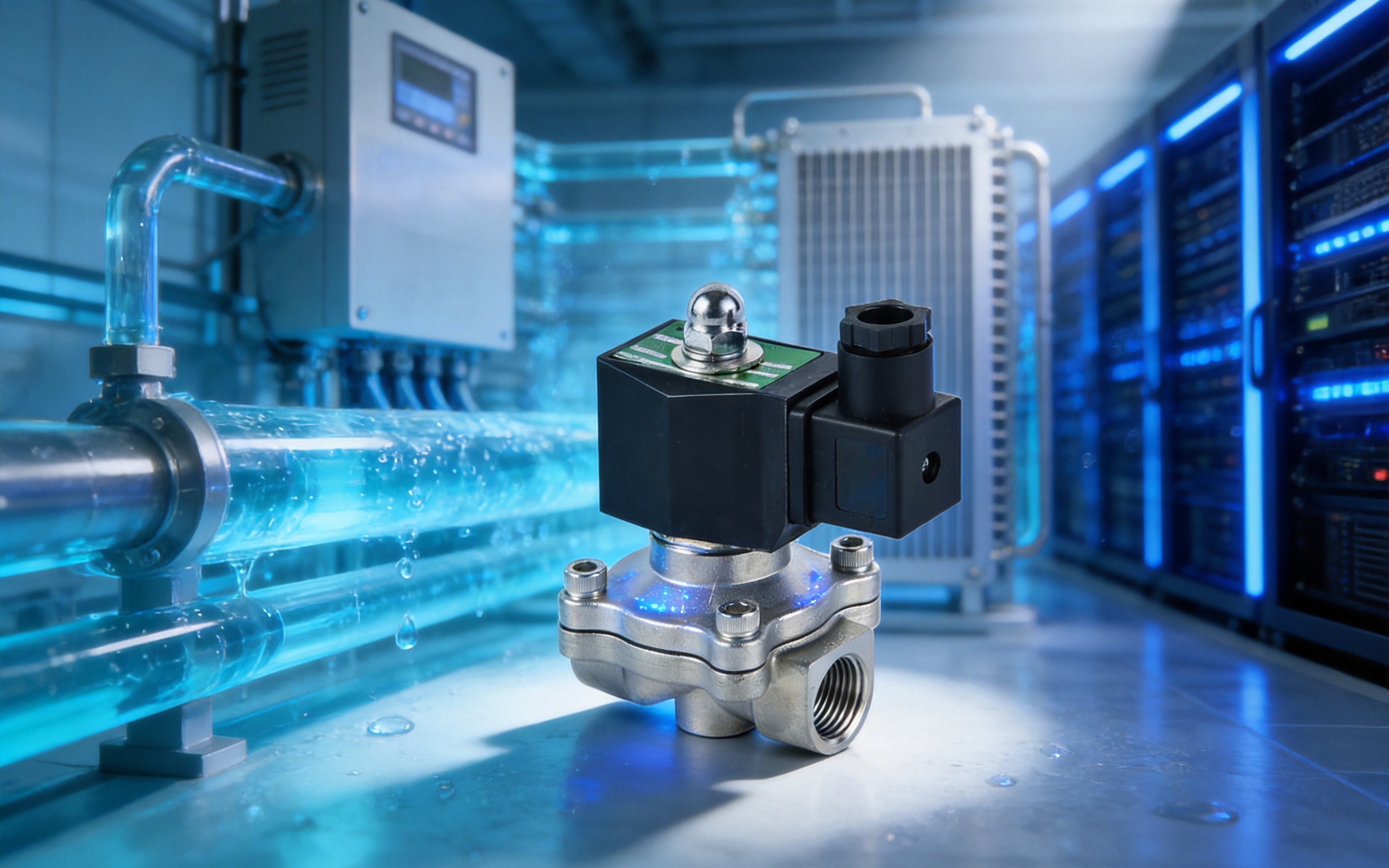
2WB160-15 Solenoid Valve: Cooling-Duty RFQ Checks
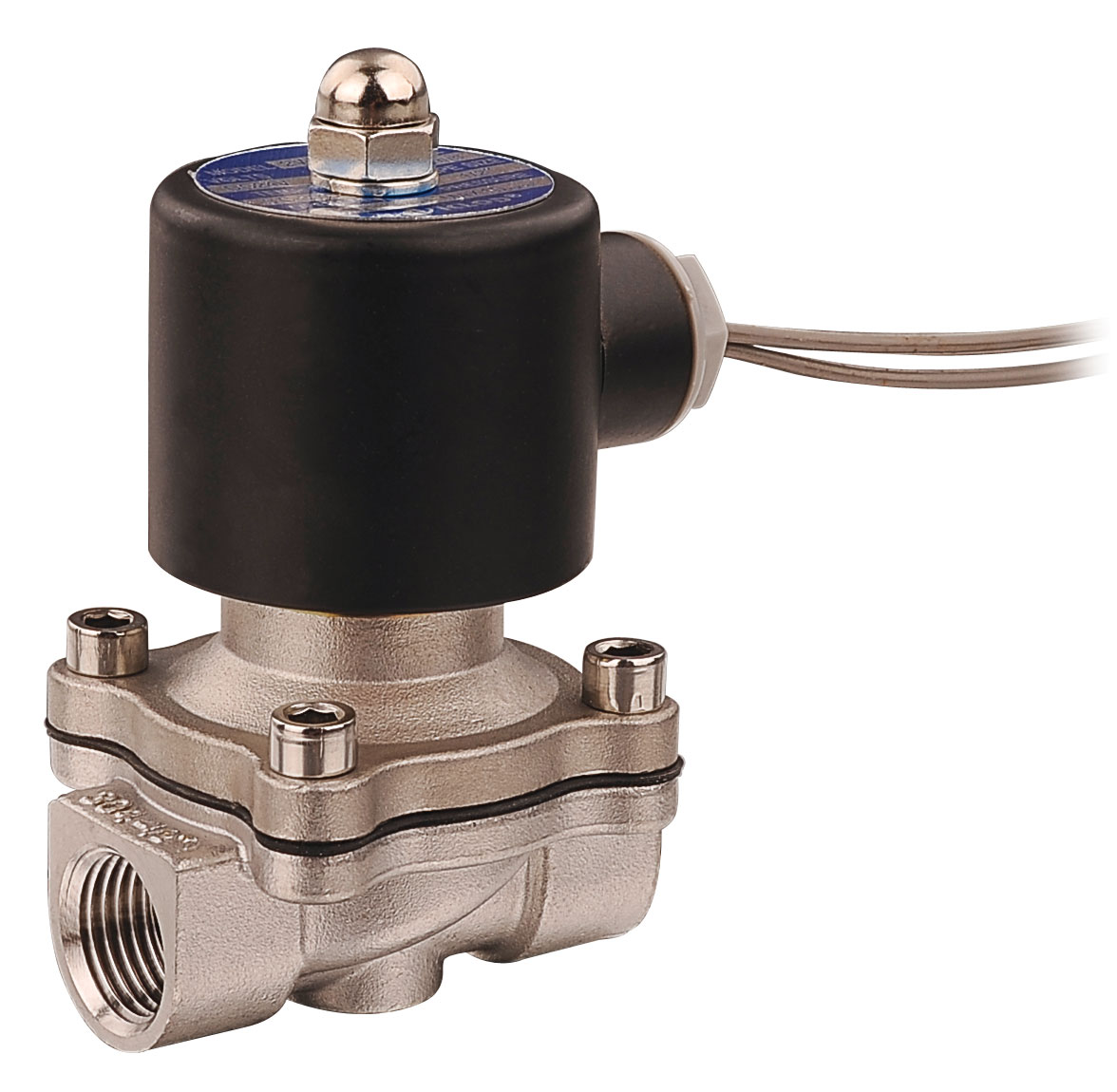
The Kailing 2WB160-15-E-S is a 2/2-way, normally closed, direct-acting stainless steel solenoid valve with a 16 mm orifice, G1/2 (DN15) ports, an EPDM diaphragm and an IP65-rated square coil. The catalog lists water pressure 0–0.7 MPa and an EPDM seal reference of -10 °C to +120 °C. These figures identify a configuration for review; they do not establish compatibility with every coolant, CDU circuit or cleaning method.
Key takeaways
- 2WB160-15-E-S: 16 mm orifice, G1/2 (DN15) port, EPDM seal, IP65 square coil, CV 4.8.
- Direct-acting diaphragm valve — opens from zero pressure differential, normally closed as standard.
- Media temperature -10 °C to +120 °C with EPDM; water pressure 0–0.7 MPa.
- For cooling, CDU or washdown inquiries, confirm the exact coolant, duty point, wetted materials and complete electrical enclosure.
Key data at a glance
| Parameter | Value |
|---|---|
| Orifice | 16 mm |
| Port | G1/2 (DN15), G or NPT thread |
| Seal | EPDM diaphragm |
| Coil protection | IP65 square coil (code S) |
| Media temperature | -10 °C to +120 °C (EPDM) |
| Water pressure | 0–0.7 MPa |
| CV value | 4.8 |
The model code reads as follows: 2WB = stainless steel fluid solenoid valve, 160 = 16 mm orifice, 15 = 1/2 in port, E = EPDM seal, S = square IP65 coil, with the voltage appended — for example 2WB160-15-E-S-DC24V.
Why choose the 2WB160-15-E-S for liquid cooling duty?
EPDM and NBR references: confirm the actual coolant
The catalog lists several seal options, with different temperature references. Use those references to request the exact seal compound for the quoted model. Supply the coolant brand, composition, concentration, normal and peak temperatures, and cleaning fluids. A generic EPDM or NBR temperature range does not establish complete-valve chemical or steam suitability.
| Catalog seal reference | Media-temperature reference | What to confirm |
|---|---|---|
| NBR | -5 °C to +80 °C | Exact fluid, seal compound and selected valve limits |
| EPDM (code E) | -10 °C to +120 °C | Coolant/additives and operating plus cleaning conditions |
The existing catalog also lists VITON and selected silicone options. Confirm availability and limits for the exact size and ordering code; do not transfer a small-model rating to a larger model.
What the IP65 coil actually protects in a liquid-cooling cabinet
Where an IP65 coil is required, ask for the rating and installation conditions of the complete coil, connector and cable assembly. Describe condensation, cleaning chemicals and washdown exposure separately. The enclosure code is not proof of immersion suitability or of the complete cooling-cabinet installation.
Stainless steel body vs brass body
The 2WB family is a stainless fluid-valve reference. Request the actual body grade, all wetted materials and seal compound for the quotation. Deionized water, formulated water-glycol coolant, cleaning chemicals and other heat-transfer fluids require a written compatibility review; a stainless body alone does not establish suitability.
Technical specifications: 2WB160-15 with EPDM seal and IP65 coil
| Parameter | Value |
|---|---|
| Model | 2WB160-15-E-S |
| Body material | Stainless steel 304 (316 on request) |
| Seal / diaphragm | EPDM |
| Valve type | 2/2-way diaphragm, normally closed |
| Action | Direct acting — opens from zero pressure differential |
| Orifice | 16 mm |
| Port | G1/2 (DN15); NPT thread available |
| CV value | 4.8 |
| Pressure range | Water 0–0.7 MPa; air 0–1.0 MPa; oil 0–0.9 MPa (with suitable seals) |
| Media temperature | -10 °C to +120 °C (EPDM) |
| Ambient temperature | -5 °C to +60 °C |
| Coil | Square coil, IP65 (code S); AC 18 VA / DC 16 W |
| Standard voltages | AC 24/110/220/380 V (50/60 Hz); DC 12/24/36/110/220 V |
| Medium review | Specify the actual fluid and obtain configuration-specific compatibility confirmation |
Direct action matters in cooling loops: the valve opens from zero pressure differential, so it can be energized before the pumps build head during a startup or standby sequence. The 2WB threaded table includes larger sizes as well as 2WB250-25 and 2WB500-50. Review the current model table for the required port and flow; evaluate the 2WBF flanged family separately.
Application scenarios
1. AI data center liquid cooling: CDU loop shutoff
For a proposed CDU duty, supply normal and peak flow, minimum and maximum inlet/outlet pressure, startup conditions, required power-loss state and allowable leakage. The 16 mm orifice and Cv 4.8 are catalog identifiers, not proof of adequate flow for a particular main circuit.
2. Rack manifolds and cold-plate branch groups
Provide the manifold and branch drawing, pipe size, available space and required operating sequence. Ask the reviewer to size each valve against its own duty point instead of inferring a branch arrangement from the port size alone.
3. Industrial cooling-water circulation
Identify circulating-water treatment, additives, temperatures and transient conditions. Confirm the required normal state and behavior of the whole system on loss of power; normally closed action alone does not establish a system safety function.
4. Cleaning equipment and water treatment
Supply every cleaning chemical, concentration, temperature, duration and cycle frequency. Request compatibility confirmation for the body, internal wetted parts and seal, plus the coil/connector installation requirements.
Installation and maintenance points
- Thread sealing: request the connection drawing and sealing method for the actual thread standard and mating fitting. Keep sealing debris out of the fluid path.
- Engagement and torque: obtain the specified engagement and tightening torque for the quoted valve and fitting. Support the valve body so piping stress is not transferred into the ports.
- Inlet filtration: confirm upstream filtration and cleanliness requirements for the exact fluid and model.
- Orientation: follow the model-specific installation drawing and coil-position requirements.
- Water hammer: provide the piping and operating sequence and request review of pressure transients.
- Inspection: agree exercise and maintenance intervals from the equipment instructions and actual service conditions.
Common troubleshooting reference
| Symptom | Probable cause | Action |
|---|---|---|
| Valve will not open | Coil burned out; supply voltage too low | Replace coil; verify rated voltage at the coil terminals |
| Valve will not close | Particle holding the diaphragm seat; aged diaphragm | Flush and clean the body; replace the EPDM diaphragm |
| Coil overheats | Armature stuck while energized | Remove debris; check armature movement and media cleanliness |
| Leak at the port | Damaged face O-ring; insufficient torque | Replace the O-ring; re-tighten to the specified torque |
Frequently asked questions
Is the 2WB160-15-E-S suitable for glycol-water coolant in AI liquid cooling?
Compatibility needs confirmation for the actual coolant brand, composition, concentration and operating plus cleaning temperatures. The catalog EPDM temperature reference does not prove suitability throughout that whole range for every water-glycol mixture. Request a written review for the complete quoted configuration.
What is the difference between the EPDM seal and the standard NBR seal?
The catalog gives EPDM and NBR different temperature references. Use the exact fluid and temperature to request a seal selection; the generic material name does not establish steam, oil or coolant suitability for the whole valve.
Can this valve be used in a CDU main circuit?
Provide the CDU flow and pressure data for sizing. Cv 4.8 and a G1/2 port do not establish sufficient main-circuit flow. Review the 2WB threaded model table for larger sizes and confirm the 2WBF flanged range separately.
What does the IP65 coil rating cover?
Request the enclosure rating and installation conditions for the actual coil, connector and cable assembly. Confirm condensation and cleaning exposure separately; do not treat an IP code as immersion approval or whole-system suitability.
What are the MOQ and lead time?
Confirm MOQ, available configurations, sample costs, delivery terms and timing for the exact ordering code, quantity and destination in the written quotation. For a requested change, provide the drawing and requirements so feasibility can be reviewed.
Quality, OEM capability and how to request a quote
Request the applicable company and model documents for the exact quoted configuration. Agree the sample checks, leakage test, operating conditions and acceptance criteria before ordering. The published catalog does not establish a universal 1.5× pressure test with a five-minute hold for every valve.
To request a quotation, send the model (or the medium, pressure, port size, body material and voltage), the quantity and the working conditions through the contact page, or review the full 2WB stainless fluid solenoid valve series. A photo or drawing of the existing installation speeds up the review.
Need a quotation?
Send the page link, quantity, drawings and working conditions to Kailing for review.