
How to Choose a High-Temperature Solenoid Valve: Media, Materials & Custom OEM Guide
Why temperature decides the valve
Temperature is the first thing to check because heat attacks a solenoid valve in two ways at once. It stresses the elastomer seals and diaphragms that actually stop the flow, and it heats the coil that powers the valve. A valve rated only for cold water may pass a short test and still fail in service when a seal softens, leaks, or hardens and cracks after weeks of hot media. In high-temperature applications the failure is rarely sudden; it shows up as a slow leak, a sticky plunger, or a coil that runs too hot and burns out.
Match the seal to the medium — not just the temperature
Seal material is the single most important choice. General engineering guidance groups the common options by heat tolerance (always confirm the exact grade with the manufacturer):
- NBR (nitrile) — a general-purpose seal for cool water, air and oil; not intended for sustained heat.
- EPDM (ethylene propylene) — a heat-tolerant seal widely used for hot water and low-pressure steam.
- FKM / Viton — a high-temperature seal suited to hot oils, thermal fluids and many chemicals.
- PTFE — the most heat- and chemical-resistant option for aggressive media and the highest temperatures.
Body material matters too. Brass is economical for clean hot water; stainless steel resists corrosion in steam and chemical service and is the safer default for elevated temperatures.
Temperature and pressure work together
A valve's rated temperature usually assumes a specific pressure, and higher temperature can lower the safe operating pressure for the body and seat. When the medium is both hot and pressurized — such as saturated steam — confirm the combined pressure/temperature rating rather than reading the two figures separately. This single check avoids ordering a valve that fits the pipe but is under-rated for the actual service conditions.
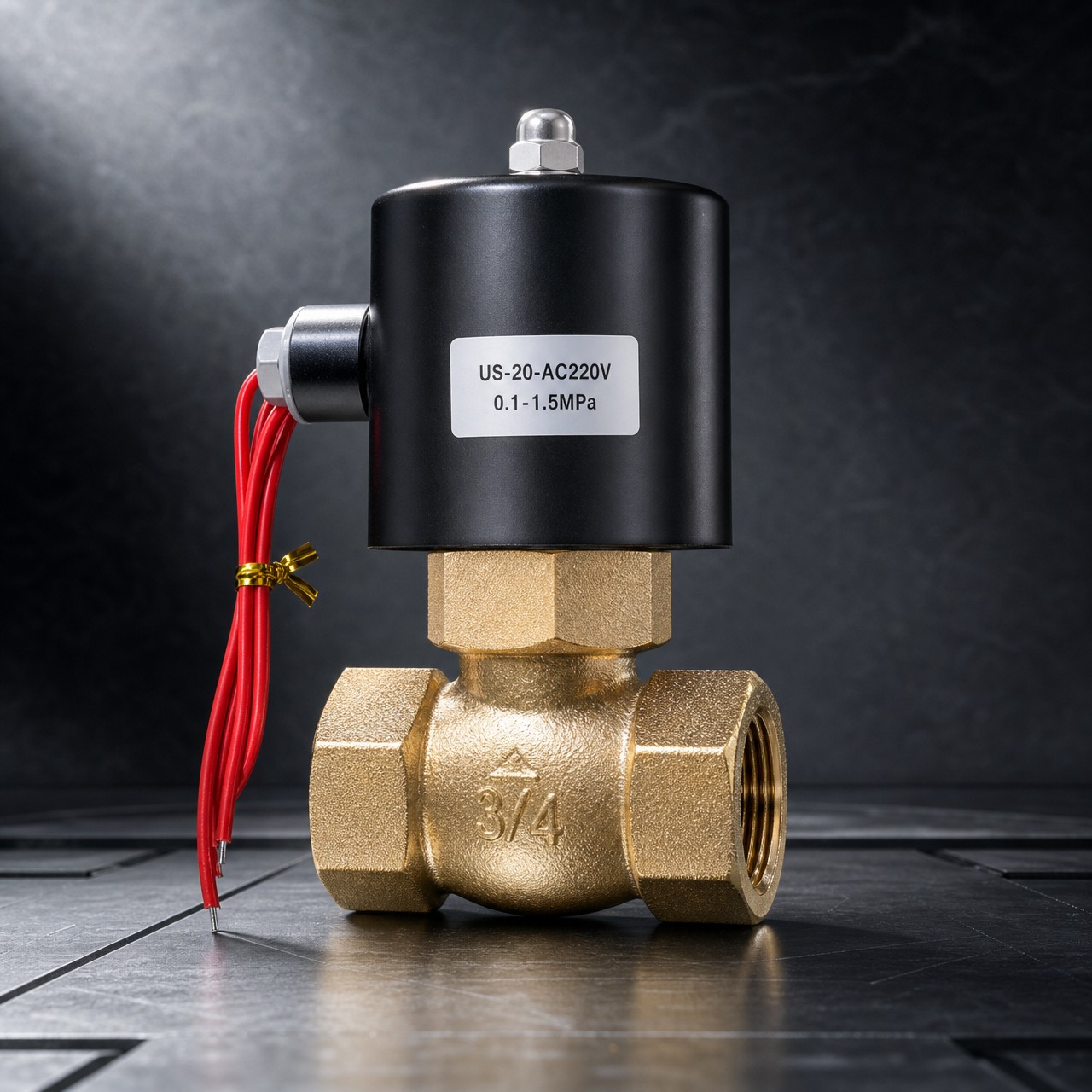
Coil insulation keeps the actuator alive
The coil is the electrical side of the same problem. Solenoid coils are built to insulation classes — Class B, F and H being the common industrial grades — and a hotter environment calls for a higher class so the winding insulation does not degrade. A high-temperature valve should pair a suitable seal with a coil whose insulation class and duty rating are approved for the operating temperature and for continuous (not just intermittent) energizing.
What to specify before you ask for a quote
To get an accurate recommendation, be ready to confirm these points with the sales engineer:
- Medium and its temperature — continuous temperature and any peak or surge temperature.
- Pressure and flow — operating pressure, differential pressure and the required Cv (flow coefficient).
- Voltage — AC or DC, and the control-circuit voltage to match your control system.
- Port size and connection — thread type and port diameter to match the existing pipework.
- Function — normally open or normally closed, and two-way or three-way.
- Environment — ambient temperature, dust, moisture, and whether the valve runs continuously or on a duty cycle.
Common high-temperature applications
- Hot water and boiler feed — EPDM seals with brass or stainless bodies.
- Steam lines — sterilization, cleaning-in-place (CIP) and process heating; specify steam-compatible seals and confirm the pressure/temperature rating.
- Thermal oil and heat-transfer systems — FKM or PTFE seals for hot oil.
- Hot air and drying — check the coil class and confirm the media is clean and dry.
- Chemical and process lines — corrosion-resistant stainless bodies with PTFE or FKM seals.
Selection checklist
| Parameter | What to confirm | Why it matters |
|---|---|---|
| Medium temperature | Continuous and peak value (°C) | Drives seal and coil choice |
| Medium type | Water, steam, oil or chemical | Seal and body compatibility |
| Body material | Brass or stainless steel | Corrosion and temperature rating |
| Seal material | NBR, EPDM, FKM or PTFE | Temperature ceiling and media compatibility |
| Coil insulation | Class B, F or H | Safe continuous operation |
| Pressure and Cv | Operating pressure and flow | Correct sizing and response |
| Voltage | AC/DC and level | Matches the control circuit |
| Port size | Thread type and diameter | Fits existing pipework |
Request a quotation
If you are sourcing a high-temperature solenoid valve for hot water, steam, thermal oil or a chemical process, send the medium, temperature, pressure and voltage — and whether you need a standard part or a custom build. Sales will review the supplied requirements and confirm the proposed configuration, available documents and quotation timing for the request.
Frequently Asked Questions
- FAQ What temperature can a standard solenoid valve handle?
A general-purpose water solenoid valve with NBR seals is typically intended for cool water and air, and is not the right choice once the medium is consistently hot. For hot water and steam, a valve with EPDM seals (and the matching body and coil) is normally required; for hot oil or chemicals, FKM or PTFE seals are used. The exact limit depends on the model, so confirm the rated temperature with the manufacturer before ordering. - FAQ Can Kailing build a custom high-temperature solenoid valve?
Yes. Ningbo Kailing Pneumatic (KLQD) manufactures solenoid valves in its 2W and 2WB series and supports OEM/ODM programs built to your drawing. Share the medium, temperature, pressure, voltage, port size, material and quantity, and a sales engineer will confirm the matching series and seal options for your conditions.
Need a quotation?
Send the page link, quantity, drawings and working conditions to Kailing for review.