Material Compatibility Checks for Pneumatic and Fluid Solenoid Valves
When buyers source fluid control components, the specification that most often decides whether a valve reaches its full service life is not flow or voltage — it is material compatibility. A valve that looks right on paper can fail in weeks if the body corrodes in the media or the seal swells, hardens or cracks. This guide sets out the material checks that B2B buyers, project engineers and OEM/ODM evaluators should run before ordering pneumatic and fluid solenoid valves.
Why material compatibility decides valve life
The seal material decides whether a fluid solenoid valve survives in a cooling loop. The same logic applies to every duty: the body and the seal are the two surfaces in permanent contact with the media, and both must resist that media at the working temperature and pressure — across the full duty cycle, not just at start-up. Getting this wrong produces the classic failure modes: swollen or brittle seals, pitted bodies, sticking armatures and external leakage.
Check 1: Match the body material to the media
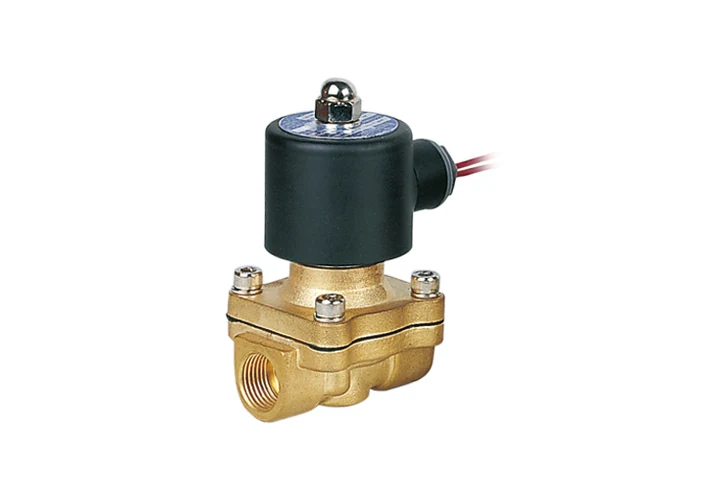
Brass for standard pneumatic and neutral water duty. Brass is the economical default for compressed-air circuits and neutral fluids. For pneumatic solenoid valves such as the 4V210-08, Kailing specifies the working media as compressed air filtered to 40 μm, so a standard brass-body valve with clean, dry air matches the documented pneumatic duty.
Stainless steel for water-glycol, weak chemicals and corrosive lines. For fluid duty beyond neutral water, Kailing documents its 2WB stainless steel valves for pure water, weak acid, weak alkali and mildly corrosive media. The 2WB500-50, the largest threaded model, pairs a 304 stainless steel body (316 on request) with NBR, EPDM, FKM or silicone seals and a 0–0.7 MPa water pressure rating for duties such as seawater desalination and reverse-osmosis plant lines.
For AI liquid-cooling duty, Kailing documents the 2WB160-15-E-S — a direct-acting stainless steel solenoid valve with an EPDM diaphragm and an IP65-rated square coil — whose working envelope covers AI liquid-cooling CDU loops, water-glycol circuits, industrial cooling-water lines and washdown equipment, where a brass body or an NBR seal is the wrong choice.
Connection material matters as well. On stainless lines handling weak acids or weak alkalis, a flange also removes the sharp thread roots where pitting begins, which is why Kailing offers the flanged 2WBF range for larger fluid lines.
Check 2: Match the seal to the media
Kailing documents the same four seal families across its fluid and vacuum valve ranges — NBR, EPDM, VITON and silicone — each with its own temperature range, chosen by medium, concentration and temperature.
| Seal | Typical fit (general guidance — not a substitute for chemical-resistance data) | Verify before ordering |
|---|---|---|
| NBR | General-purpose air, water and oil-based media at moderate temperatures | Not the right choice for water-glycol cooling loops; check hot-water and ozone exposure |
| EPDM | Hot water, water-glycol coolant and many weak chemicals | Not for petroleum oils and fuels |
| FKM / VITON | Oils, fuels and many weak chemicals at elevated temperatures | Confirm specific solvents and hot-water or steam suitability |
| Silicone | Wide temperature window with flexible low-temperature performance | Lower mechanical strength and abrasion resistance than other elastomers |
These fits are general engineering guidance, not Kailing data: confirm each seal against the chemical-resistance data for your exact media, concentration and temperature.
Two data points anchor the seal choice in Kailing's own documentation. On the 2WB160-15-E-S, the EPDM seal is rated for media temperatures from -10 °C to +120 °C with water at 0–0.7 MPa. The seal families themselves are documented consistently across product ranges, with OEM programs supported by the manufacturer.
Check 3: Verify the temperature envelope
Material compatibility is temperature-dependent: a seal that resists a medium at 20 °C may fail near its upper limit. Confirm three temperatures before ordering — the minimum and maximum media temperature, the ambient temperature at the installation site, and the coil's insulation and protection class. The documented EPDM envelope of -10 °C to +120 °C on the 2WB160-15-E-S shows how the seal, not just the body, defines the operating window.
Check 4: Verify pressure in the right unit for the media
Air and water ratings differ for the same valve. In the 2WBF flanged range, the smaller sizes are rated for air at 0-1.0 MPa and water at 0-0.7 MPa, so a water duty must be checked against the water figure, not the air figure. Function matters as much as material on vacuum and zero-pressure-start duty: a vacuum line needs a direct-acting valve, because there is no line pressure left to drive a pilot piston or diaphragm — the reason Kailing's VX22 and QX23 vacuum ranges are direct-acting for this duty.
Check 5: Confirm the actual media, not the media category
"Water" is not a specification. Before ordering, write down the exact medium and its variables: glycol percentage and inhibitor package for coolant loops, chloride content for seawater and reverse-osmosis duty, concentration for weak acids and alkalis, and any cleaning or flush chemicals that pass through the valve during CIP or maintenance. Send this media sheet to the manufacturer and get written confirmation of body and seal compatibility — concentration and temperature, not just the media name, decide the correct seal.
Pre-order compatibility checklist
- Define the exact media — name, concentration, additives and glycol percentage where relevant.
- Select the body material — brass for standard air and neutral water; stainless steel for water-glycol, weak chemicals and corrosive or washdown duty.
- Select the seal — NBR, EPDM, FKM/VITON or silicone, chosen by medium, concentration and temperature.
- Confirm the temperature envelope — media minimum and maximum, ambient, and coil rating.
- Confirm pressure against the rating for the actual media — water ratings are lower than air ratings.
- Confirm function — direct-acting for vacuum and zero-pressure-start duty.
- Obtain written confirmation of compatibility from the manufacturer before ordering.
FAQ
Can I use a brass-body solenoid valve with water-glycol coolant?
For AI liquid-cooling CDU loops and water-glycol circuits, Kailing documentation identifies a brass body or an NBR seal as the wrong choice and specifies stainless steel bodies with EPDM seals for this duty — for example the 2WB160-15-E-S.
Which seal should I choose for hot water above ambient temperature?
EPDM is the documented seal for hot-water duty in Kailing's stainless fluid valves: on the 2WB160-15-E-S it is rated for media temperatures from -10 °C to +120 °C at water pressures up to 0.7 MPa. Confirm your exact concentration and additives before ordering.
What media can a stainless steel 2WB valve handle?
Kailing documents the 2WB series for pure water, weak acid, weak alkali and mildly corrosive media, with a choice of NBR, EPDM, FKM or silicone seals and water pressure ratings around 0–0.7 MPa on the models documented here.
Do I need a direct-acting valve on a vacuum line?
Yes. A vacuum line needs a direct-acting valve, because there is no line pressure left to drive a pilot piston or diaphragm. Kailing's VX22 and QX23 ranges are direct-acting for exactly this reason.
Confirm material compatibility with Kailing
Send Kailing your media data sheet — medium, concentration, temperature range, pressure, connection size and coil voltage — and request written confirmation of body and seal material compatibility for your fluid control components. Kailing supports OEM programs with seal options matched to the medium and temperature.
Need a quotation?
Send the page link, quantity, drawings and working conditions to Kailing for review.