Start with a measurable question
For an OEM, maintenance engineer, or distributor assessing fluid control components, organize the enquiry around three questions:
- Where is unintended air consumption suspected?
- Which component or assembly acceptance criteria apply?
- What measurements would support a proposed energy-improvement claim?
Request documented test conditions rather than relying on an undefined description such as “low leakage.” Keep leak assessment, component acceptance, and electrical-energy verification as separate reporting tasks.
Before estimating any supply or energy effect, record suspected unintended consumption and obtain an engineering review of the system boundary and operating conditions.
Scope: This is a planning checklist for a review with the responsible engineer. It is not a test or isolation procedure and sets no product leakage limit or numerical energy-saving guarantee.
1. Define the test boundary and operating state
Prepare an assessment record before selecting a method:
- Identify the machine, branch, assembly, or component included in the assessment.
- Record the pressure measurement location and proposed comparison pressure.
- Describe whether equipment is producing, idle, or in a proposed isolated test state.
- Identify intended air users, including process blowing and functions expected to remain active.
- Record relevant valve positions, actuator positions, cycle demand, and maintenance condition.
- Specify instruments, units, observation period, and proposed acceptance criteria.
Request a circuit review before classifying measured idle consumption as leakage.
Before an intrusive inspection or repair, ask the responsible site personnel to approve the method, isolation arrangements and equipment state under the applicable site and equipment instructions. This checklist is not authorization to perform the work.
2. Match the proposed method to the question
Use this table to prepare questions for the responsible engineer. Each entry is a proposed approach for review, not confirmation that the method or instrument is suitable for a particular installation.
| Assessment objective | Method to discuss with the responsible engineer | Documentation to request |
|---|---|---|
| Locate suspected escape points | Ultrasonic inspection | Instrument instructions, survey conditions, coverage, limitations, and confirmation method |
| Investigate an accessible suspected joint | Manufacturer-approved leak-detection solution | Material compatibility, application restrictions, approved procedure, and result-recording requirements |
| Assess pressure retention within a defined boundary | Pressure-decay testing | Procedure, boundary definition, isolated volume, pressure, temperature conditions, stabilization, and observation period |
| Assess branch consumption | Flow measurement | Meter suitability, installation requirements, operating state, units, and reference conditions |
| Evaluate a proposed electrical-savings claim | Compressor power and operating-data comparison | Measurement boundary, production demand, control state, observation period, and comparison method |
If energy savings are part of the review, request compressor electricity measurements and the comparison method separately from any pressure-retention or estimated-leak-flow report.
If a report converts pressure decay or an inspection signal into estimated leak flow, request the calculation method, inputs, assumptions, and applicability limits. For flow comparisons, ask whether values represent actual volumetric flow or flow referenced to specified conditions.
Keep procedure approval separate from the method name. Request instrument documentation and an engineering suitability review before adopting any row as a test plan.
3. Specify the leakage path and acceptance scope
Ask the test specification to identify whether acceptance covers leakage to the surroundings, leakage across an internal sealing boundary, or both. Agree the exact boundary, operating state and limit for the model being assessed.
For valves, ask which ports, pressure direction, and commanded state the proposed test covers. For actuators, request the relevant chamber and position conditions. For assemblies containing tubing, fittings, regulators, and other fluid control components, specify whether acceptance applies to individual items or the completed assembly.
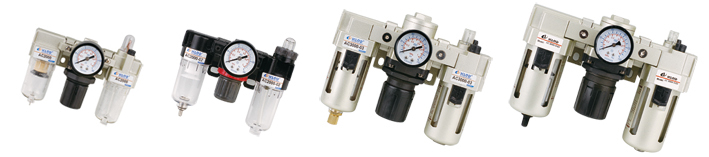
Request the exact model's datasheet and agreed test specification. Do not use a photograph or model name as evidence of leakage limits, pressure ratings, sealing materials, or certification.
4. Connect corrective work to verification
Create a repair register linking each observation to a proposed action and a retest result. Include the location, supporting evidence, suspected component, responsible person, planned intervention, and verification outcome.
For prioritization, document measured consumption where available, the duration of the affected operating state, production consequences, repair access, and maintenance constraints. Label estimates separately from instrument readings and record their assumptions.
Request an applicable, documented estimation procedure before reporting sound intensity as a quantified leak estimate. Before proposing pressure-setting changes, request engineering confirmation of the pressure and dynamic performance required at the point of use.
5. Evaluate electrical savings separately
After corrective work, plan a repeat leak or flow assessment under comparable conditions. For a proposed energy-savings claim, request compressor electricity measurements over an agreed representative operating period.
Request operating measurements and a documented comparison method before accepting a site-specific electrical-savings conclusion. Record leakage-flow results and compressor electricity results separately.
Record production output, operating hours, pressure settings, control state, measurement boundaries, and other material changes alongside energy data. Explain differences between comparison periods and the method used to account for them.
If only leak-flow measurements are available, report the measured flow change without assigning an electrical-savings figure. For a financial assessment, identify the site's electricity tariff, documented intervention costs, and whether the proposed energy change is measured or estimated. Do not substitute a generic savings percentage for site evidence.
6. Put measurable requirements into the RFQ
For procurement and OEM qualification in the United States or Europe, request:
- Intended medium, operating conditions, and required function.
- Pressure and flow documentation for the exact model and configuration.
- External and internal leakage acceptance criteria, where relevant.
- Test pressure, test medium, temperature conditions, duration, and measurement method.
- Treatment of intentional consumption or exhaust during testing.
- Applicable test records, maintenance instructions, and replacement-part information.
- Application-specific documentation required for the intended installation.
Confirm the scope and applicability of each document. Do not treat company-level statements as evidence that every product has the same approvals or performance. No product certification or market-compliance conclusion is established here.
7. Documents to request for component review
Request the test method, instrument identification, calibration status where relevant, exact model and configuration, operating conditions and retained results. An equipment list does not establish a particular product’s leakage limit or energy-saving performance.
Compare existing air-preparation units and directional-valve references, then send the actual circuit, pressure, duty and acceptance requirements for a model review.
Need a quotation?
Send the page link, quantity, drawings and working conditions to Kailing for review.