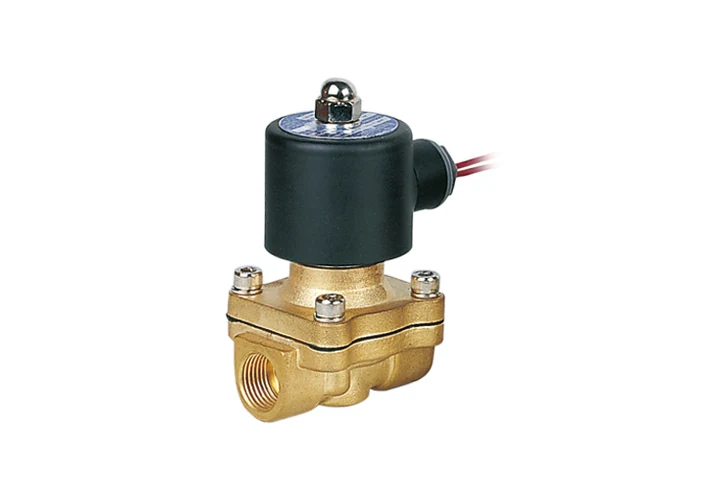
Solenoid Valve Voltage, Duty Cycle and Enclosure Selection for Export Machinery
Voltage, coil power and enclosure protection decide whether a fluid control component survives installation and years of plant operation. A valve that works on the bench can still fail in the field if the coil voltage, switching duty or environmental protection is mismatched.
Start with the supply voltage
The safest selection path is to confirm the machine’s available supply before choosing any valve model. Some Kailing documents append the voltage to the model code, such as 2WB160-15-E-S-DC24V.
That matters for export machinery because the same machine platform may need to be reviewed for different control architectures and local power arrangements. For example, Kailing documents that the 4V210-08 DC24V coil can be driven directly by a PLC output, and that its AC220V variant can take power directly from the field supply for older lines or auxiliary stations. This keeps the electrical interface aligned with the actual control architecture instead of assuming one voltage fits every machine or region.
The 2WB500-50 is offered with AC 220 V and DC 24 V coils as standard, and the documented full range spans AC 24/110/220/380 V and DC 12/24/36/110/220 V.
Before finalizing the drawing, record three details:
- The actual control voltage available at the valve, not just the machine nameplate.
- Whether the signal is switched continuously or only during start and stop events.
- The tolerance expected from the local power supply and control system.
Match coil power and duty cycle to the machine cycle
Coil power is a design input for heat build-up, panel loading and long-cycle stability; confirm series-specific thermal behavior with the manufacturer.
Documented examples include:
- The QX23 packaging valve is catalogued with AC 10 W / DC 13 W coils.
- The flanged 2WBF15 is listed at AC 15 W / DC 25 W.
| Series | Documented coil power |
|---|---|
| QX23 | AC 10 W / DC 13 W |
| 2WBF15 | AC 15 W / DC 25 W |
For export machinery, the more important question is not only rated power, but how often the valve switches and how long it stays energized. A packaging machine, dosing system or automated fixture may hold a coil energized for different periods. If the manufacturer’s datasheet does not state the allowable duty cycle or continuous energization behavior, request that confirmation before releasing the drawing.
Available documentation for the referenced valve families does not provide a universal duty-cycle table, so duty-cycle suitability must be confirmed per valve, coil and application.
A practical check is to classify each valve position into one of three patterns:
| Machine duty | What to confirm with the manufacturer |
|---|---|
| Short pulses | Response behavior and minimum energization time |
| Intermittent holding | Coil temperature rise and permitted energized period |
| Long or continuous holding | Whether continuous duty is permitted for the selected coil and media temperature |
This step is especially useful when several valves are packed into a small control cabinet, because grouped loads can affect the local electrical and thermal design.
Specify the enclosure for the real installation point
The enclosure rating should match the valve’s physical location, not the machine’s overall IP rating. A valve inside a protected electrical cabinet faces different conditions from one mounted beside a washdown frame, coolant line or outdoor panel.
Kailing specifies an IP65-rated square coil on the 2WB160-15-E-S. That evidence supports the coil option as an enclosure-related selection point, but it should not automatically be treated as a rating for every other part of the valve installation. The complete valve assembly, cable entry and connector choice should be confirmed before assigning machine-level electrical protection to the selected valve.
Use the installation zone to guide the request:
- Protected cabinet mounting: confirm coil style, connector and cable routing.
- Humid or dusty plant floor: request a sealed coil option such as IP65 where available.
- Washdown or outdoor exposure: check splash direction, cleaning chemicals and connector sealing separately.
Check media compatibility at the same time
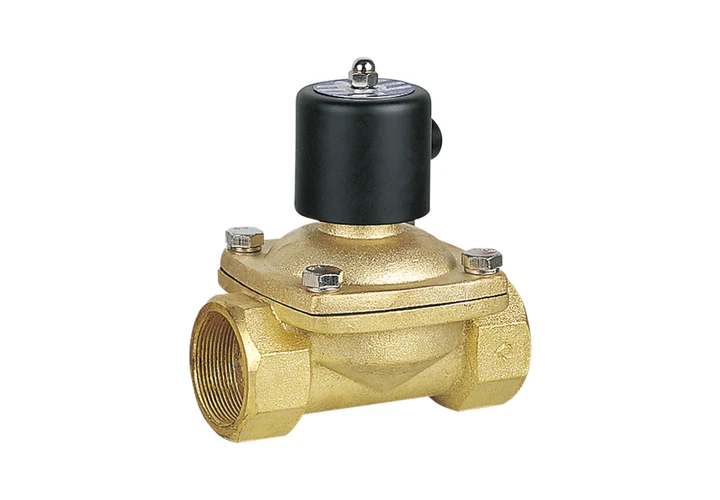
Voltage and enclosure failures are common field problems, but media compatibility decides whether the valve works at all. The 2WB500-50 is documented with a 304 stainless steel body, 316 on request, and NBR, EPDM, FKM or silicone seals.
For export machinery, this should be captured in the same specification review as voltage and duty cycle. Water-glycol coolant, weak chemicals, washdown fluids and high-temperature media can each change the correct seal and body choice.
Selection checklist for export machinery
Before releasing the drawing, confirm:
- Supply voltage and ordering suffix.
- Coil power against cabinet heat and switching frequency.
- Duty cycle or continuous energization allowance.
- Enclosure rating for the exact mounting location and complete electrical path.
- Media, temperature and seal compatibility.
- Port style and thread standard for the destination market.
- Documentation required for installation, maintenance and spare parts.
FAQ
Should I standardize on DC24V across the machine?
Kailing documents that the 4V210-08 DC24V coil can be driven directly by a PLC output, which is useful for PLC-controlled machinery. Even so, keep the voltage in the valve model code so purchasing and service teams order the exact variant.
Does higher coil power mean a better valve?
No. Coil power must match the machine’s electrical design, heat budget and duty pattern. A lower-power coil may be preferable in dense cabinets, while a higher-power coil may be required for a different valve size or function.
What should I ask for if duty cycle is not published?
Ask the manufacturer to confirm whether the selected coil is suitable for intermittent or continuous energization under your media temperature, ambient temperature and switching frequency. Do not infer that data from voltage or coil power alone.
Need a matched valve specification?
Send the machine cycle, available voltage, media, temperature range and installation environment. Kailing can help identify the correct model code, coil option and enclosure choice for your export machinery program.
Need a quotation?
Send the page link, quantity, drawings and working conditions to Kailing for review.