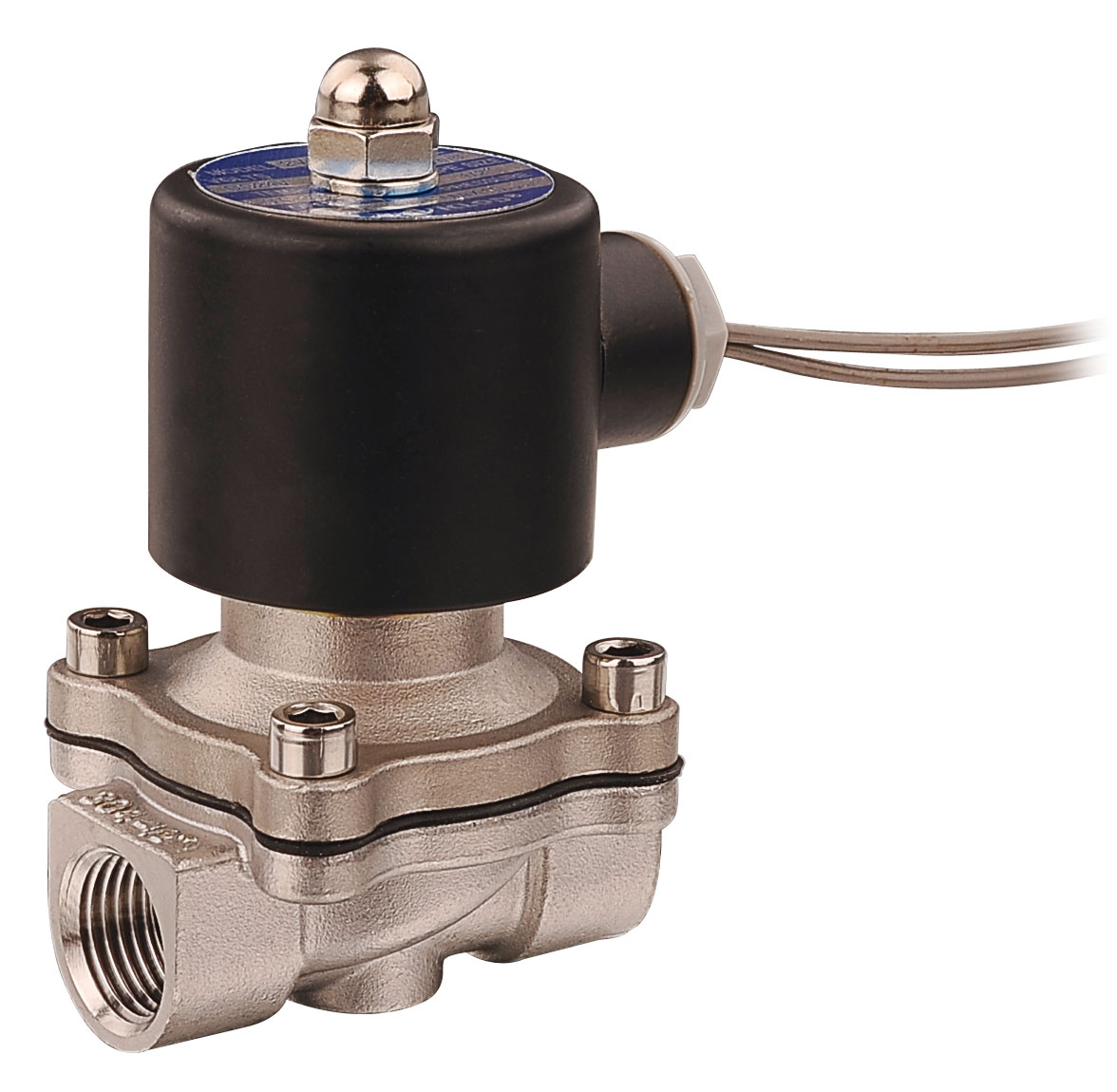
Why stainless steel matters for water valves
A stainless steel water solenoid valve is the right starting point when the water is not ordinary tap water, when the line is washed with chemicals, or when hygiene and corrosion resistance are more important than the lowest purchase price. Brass can be suitable for many clean-water circuits, but stainless steel wetted parts are usually safer for pure water, demineralized water, weak acids, weak alkalis and mildly corrosive fluids.
A stainless body alone, however, does not prove valve compatibility. The seal, armature, spring and any other wetted components must also match the medium and temperature. This is the first checkpoint in selection.
Step 1: Define the water and cleaning conditions
Before comparing models, write down:
- Water type: tap water, RO permeate, distilled water, condensate, food-grade water, weak acid or weak alkali solution.
- Concentration and additives, including dosing chemicals or cleaning agents.
- Operating temperature and any hot-wash or CIP temperature.
- Whether suspended particles or scaling are present.
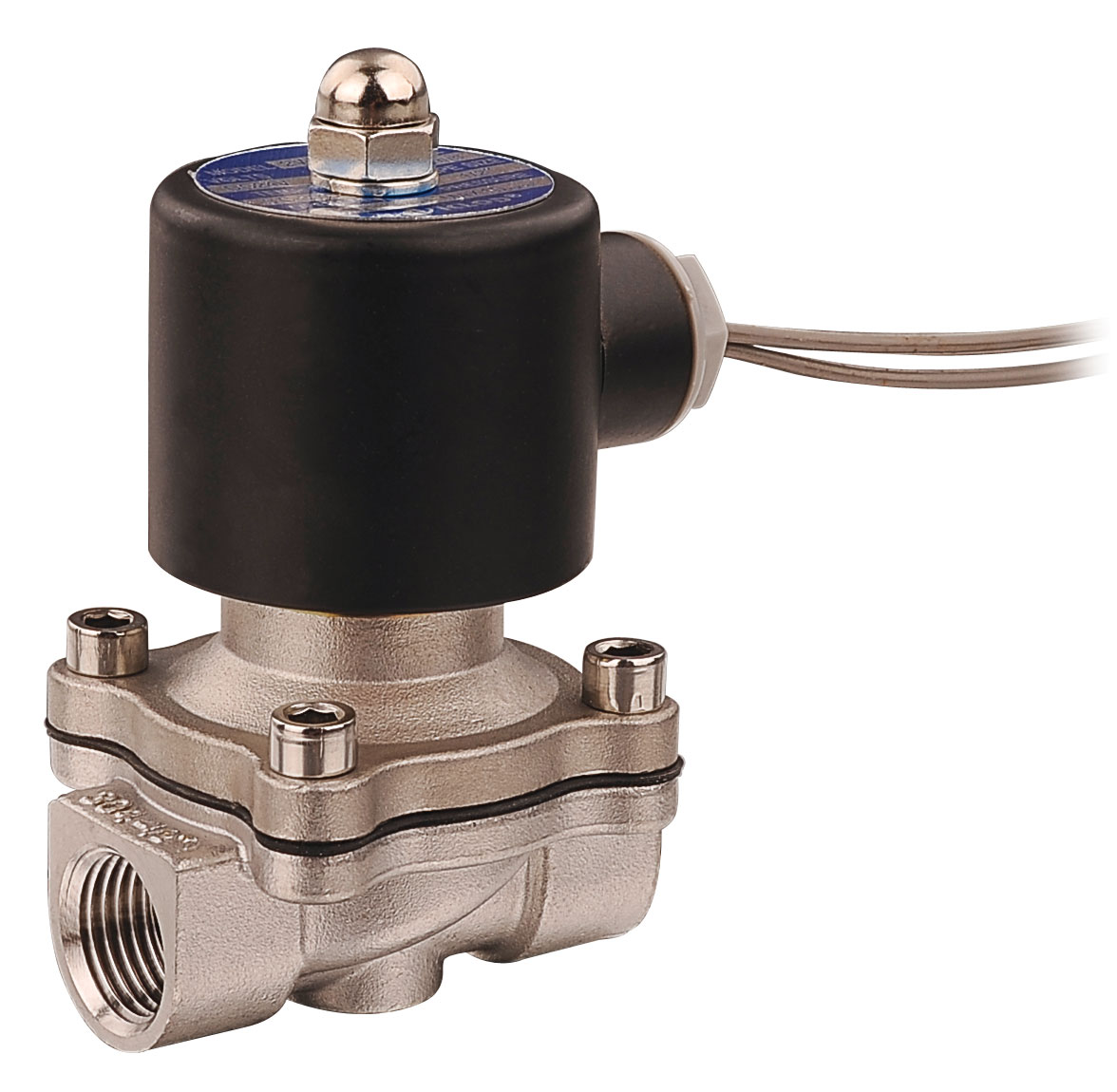
For example, the KLQD 2WB stainless steel fluid solenoid valve series is designed for pure water, weak acid, weak alkali and mildly corrosive media. Its body options include 304 or 316 stainless steel, with NBR, EPDM, FKM and silicone seal options depending on the selected model.
Seal choice should follow the fluid and temperature:
- NBR: economical choice for many water applications, typically -5 to +80°C.
- EPDM: good for hot water and many water-treatment chemicals, typically -10 to +120°C; avoid oils and hydrocarbons.
- FKM: better for some oils and chemicals, typically -10 to +150°C; confirm compatibility with hot water and steam separately.
- Silicone: used in selected low-temperature and food-related applications, subject to model confirmation.
Never assume the highest seal temperature applies to every model. Ask the supplier to confirm the body grade, seal and temperature rating on the quotation.
Step 2: Check pressure differential, not just maximum pressure
The pressure range printed for a valve family is not a universal rating. Direct-acting diaphragm valves usually have different pressure limits for air, water and oil, and normally open versions may have a lower limit.
For water selection, provide:
- Minimum inlet pressure, including low-pressure or gravity-feed conditions.
- Maximum inlet pressure.
- Outlet pressure or back pressure.
- Whether the valve must open reliably at zero pressure differential.
The 2WB direct-acting stainless steel series, for example, lists water pressure differential up to 0.7 MPa for standard models, while the broad series range is up to 1.0 MPa and normally open variants are lower. The correct figure depends on the exact model, medium and NC/NO configuration.
Step 3: Size the orifice and port by flow, not pipe size alone
A common selection mistake is choosing a valve only by the pipe diameter. A 1/2-inch pipe may need a small orifice for dosing duty or a larger orifice for full-flow transfer. Size by required flow and acceptable pressure loss.
The 2WB range covers threaded models from 4 mm to 50 mm orifice and 1/8 to 2-inch ports, plus 2WBF flanged models. Typical reference points include:
| Model | Port | Orifice | Cv |
|---|---|---|---|
| 2WB040-08 | 1/4 in | 4 mm | 0.25 |
| 2WB160-15 | 1/2 in | 16 mm | 4.8 |
| 2WB250-25 | 1 in | 25 mm | 12 |
| 2WB400-40 | 1 1/2 in | 40 mm | 29 |
| 2WB500-50 | 2 in | 50 mm | 48 |
Use the flow coefficient as a screening tool, then confirm the complete pressure-flow condition with the supplier. If your line uses flanges instead of threaded ports, send the flange standard, dimensions, bolt pattern and operating pressure.
Step 4: Choose NC or NO according to failure mode
- Normally closed (NC): closed when de-energized; opens when the coil is powered. This is the default choice when flow should stop during power failure.
- Normally open (NO): open when de-energized; closes when the coil is powered. Use it when fluid must keep flowing during a power failure or when the safe state is open.
State the required behavior after power loss, not only the electrical on/off sequence. Also confirm that the chosen model supports the NC or NO version you need.
Step 5: Match voltage and coil protection to the site
Confirm the available control voltage before ordering. The 2WB series supports common AC and DC options, including AC24V, AC110V, AC220V, AC380V, DC12V, DC24V, DC36V, DC110V and DC220V, subject to model availability.
For washdown areas, outdoor panels or dusty environments, specify the required ingress protection and coil construction. A square IP65 coil option is available for selected 2WB configurations.
Step 6: Confirm thread standard and installation position
Many valve mismatches happen at installation. Confirm:
- G/BSP or NPT thread standard.
- Port size and pipe orientation.
- Vertical flow direction requirements; most solenoid valves must be installed with flow in the marked direction.
- Space for coil removal and maintenance.
The 2WB series is generally installed with the pipe port inclined or horizontal. If the installation envelope is restricted, send dimensions early so the coil and body orientation can be checked.
Quick selection checklist
Before requesting a quotation, prepare this information:
- Fluid name, concentration and additives.
- Operating temperature and cleaning temperature.
- Minimum and maximum inlet/outlet pressure.
- Required flow and acceptable pressure loss.
- NC or NO requirement and behavior after power loss.
- Port size, thread or flange standard.
- Coil voltage and frequency.
- Seal preference or chemical-compatibility requirement.
- Installation space, orientation and protection rating.
- Quantity and target delivery date.
Where to see the matching product
The 2WB stainless steel fluid solenoid valve series provides 304/316 stainless steel bodies, direct-acting diaphragm operation, threaded 2WB and flanged 2WBF versions, multiple seal options and AC/DC coils. The product page includes model tables and downloadable PDF data for detailed checking.
If your conditions fall outside the standard table—for example, higher temperature, a different chemical concentration, a special flange or a custom voltage—send the operating parameters and drawing. A model review before ordering is the fastest way to avoid seal incompatibility, insufficient pressure differential or installation mismatch.
Need a quotation?
Send the page link, quantity, drawings and working conditions to Kailing for review.