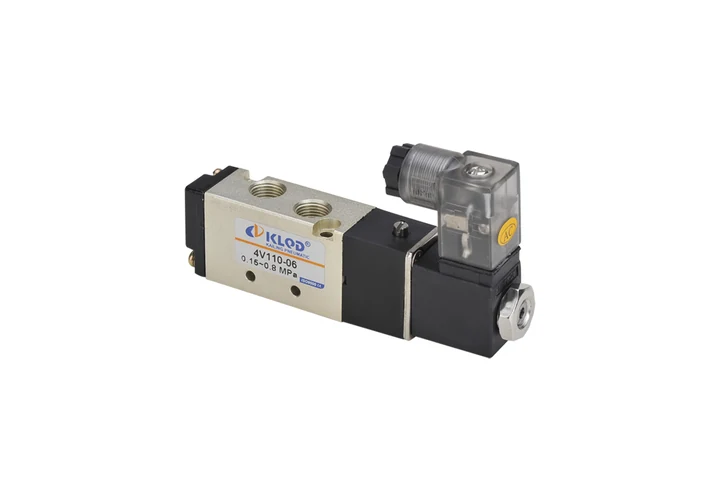
Ningbo Kailing Pneumatic Co., Ltd. (KLQD) has summarized the selection criteria its engineering team uses most often when global buyers specify fluid-control valves and valve-automation packages. The guidance covers stainless steel solenoid valves, pneumatic angle seat valves, spring-return pneumatic actuators, on/off electric actuators and complete pneumatic or electric ball valve packages. The goal is practical: match the valve to the medium, pressure, duty cycle, failure mode and control architecture—then quote the exact configuration.
1. Start with the medium, not the port size
The first selection step is media compatibility. A stainless steel body does not automatically make a valve suitable for every chemical. Kailing recommends documenting:
- Fluid, concentration and cleaning conditions
- Minimum and maximum inlet and outlet pressure
- Media temperature and ambient temperature
- Required flow, port standard and connection type
- Normally closed (NC) or normally open (NO) behavior and fail-state requirements
For general fluid switching in pure water, weak acid, weak alkali or mildly corrosive media, the 2WB stainless steel fluid solenoid valve series is a starting point. Published family data includes stainless 304/316 body options, NBR/EPDM/FKM/silicone seal options, 0–1.0 MPa pressure range, −5 to 80 °C media range and threaded G1/8"–G4" or flanged connections. The 2WBF flanged variant supports larger installation envelopes. Engineers should still verify the exact model row and seal combination, because family ranges are not universal ratings.
For compressed-air motion circuits, separate directional valves from fluid valves. A 2/2 fluid solenoid valve is not interchangeable with a 3/2 or 5/2 directional control valve; the former controls media through a line, while the latter controls pressure to cylinders, grippers and pneumatic actuators.
2. Use Cv and pressure differential before choosing valve size
Solenoid valve sizing should not be based on pipe diameter alone. For example, the 2WB threaded family publishes Cv values from 0.25 for 1/8" 2WB040 models through 48 for 2" 2WB500 models. The required Cv should be calculated from the actual flow, media density and allowable pressure drop, then compared with the model's minimum operating pressure differential and maximum differential rating.
Key checks:
- Direct-acting valves can operate from zero differential; pilot-operated types usually need a minimum differential to open reliably.
- Confirm minimum and maximum inlet/outlet pressure, not just nominal pressure.
- For media such as water, oil, air and normally open configurations, differential limits can differ.
- Select the coil voltage from the actual control cabinet supply—published options include AC24/110/220/380 V and DC12/24/36/110/220 V—and confirm duty and coil power.
3. For steam and hot process lines, check the full valve-actuator rating
Angle seat valves are often specified for steam, hot water, wash-down and filling or packaging circuits because of their Y-body flow path and compact pneumatic actuation. The KLJZF pneumatic angle seat valve series offers DN15–DN100 sizes, SS304 or SS316 bodies, PTFE sealing, 1.6 MPa nominal pressure, 0.4–0.8 MPa pilot-air supply and a published media temperature range of −10 to 180 °C. Threaded, flanged, tri-clamp and welded connections are listed.
Engineers should avoid treating those values as an automatic approval for all steam service. The exact model, temperature/pressure combination, seal and flow direction must be confirmed. For packaging or cleaning applications, Kailing also recommends reviewing water-hammer risk and specifying the position required after loss of air or power.
4. Define failure behavior before selecting the actuator
For quarter-turn valves, the actuator choice depends on what the valve must do when the air supply, electrical power or control signal is lost.
- Double-acting pneumatic actuator: air drives both strokes. Suitable where a defined spring fail position is not required.
- Spring-return pneumatic actuator: air powers one stroke and springs return the valve when actuator air is exhausted. Use where loss-of-air behavior must be predictable, such as shutdown, venting or isolation duty.
The AT-SR spring-return pneumatic actuator provides 90° rotation and a VDI/VDE 3845/NAMUR accessory interface plus ISO 5211/DIN 3337 valve mounting references. Published single-acting operating pressure starts around 4.5 bar with a 10 bar maximum working-pressure reference; standard temperature reference is −20 to +80 °C, with low-temperature and high-temperature configurations listed as options. Sizing must check both air-stroke and spring-stroke torque over the full travel, using actual valve torque, minimum available air pressure and an agreed safety margin. Loss-of-air, loss-of-power and loss-of-signal behavior must be verified in the complete pilot circuit—not inferred from the actuator alone.
5. Choose electric actuators by torque and control function
Where plant air is unavailable or fully electrical control is preferred, the KLST-B standard on/off electric actuator is intended for open-close ball, butterfly and ventilation valve automation. Catalog examples KLST-02B through KLST-60B cover 6–6000 N·m output torque, 7–150 s for 0–90° travel and DC24V, AC24V, AC110V, AC220V or AC380V power options.
The key selection rule is torque coverage: Kailing's catalog recommends choosing rated actuator torque so that 60%–80% of rated torque covers the valve working torque. DN-size tables are only references. Actual valve type, seal, pressure differential, media fouling, start frequency and environment can change required torque. For modulating or feedback applications, confirm whether the project needs simple dry contact, opening signal, 4–20 mA modulation or explosion-proof/waterproof variants.
6. Automated ball valve packages: specify the assembly, not just the valve
For pneumatic ball valves and electric ball valves, Kailing supplies complete packages using AT pneumatic actuators or KLST electric actuators. The ball-valve ordering structure covers floating straight-through, L-port and T-port three-way configurations, with DN10–DN200 catalog range and 1.6, 2.5 or 4.0 MPa pressure classes. Body options include cast steel, SS304, SS316, UPVC and CPVC; seat options include PTFE, modified PTFE (TFM), alloy steel and hard alloy.
Connection families include:
- Threaded pneumatic and electric ball valves
- Flanged pneumatic and electric ball valves
- Quick-clamp pneumatic and electric ball valves
- PVC double-union pneumatic ball valves
- Three-way threaded, flanged and quick-clamp packages
Published package data includes 0.4–0.8 MPa pneumatic air supply, −20 to +60 °C ambient range, PTFE seat range of −20 to +180 °C and modified PTFE range of −30 to +230 °C. Electric modulation supports 4–20 mA DC input. Manufacturing standards are listed as GB, ISO, ANSI, BS and DIN, which helps global projects align connection and pressure-class expectations.
Even with these packages, dimension tables are for reference. The final RFQ should state medium, pressure, temperature, DN or port size, connection standard, body and seat material, actuator model, voltage or air supply, accessories and quantity.
7. OEM and project quotation checklist
Kailing supports OEM and custom valve-package projects. To shorten technical review, buyers can send:
- Application drawing or photos, with existing valve code if replacing a unit
- Fluid, concentration, temperature and cleaning conditions
- Inlet/outlet pressures, flow, required Cv and minimum differential
- NC/NO requirement and required failure position
- Connection standard, flange standard or installation envelope
- Voltage, control signal, pilot-air pressure and cabinet constraints
- Valve torque data and its source, for actuator sizing
- Cycle frequency, environment, inspection and documentation requirements
- Whether the supply scope should include brackets, couplings, pilot valves, limit switches, positioners, air preparation and assembly checks
This information allows Kailing to quote an exact model rather than a generic family range—and to identify where a solenoid valve, angle seat valve, spring-return actuator, electric actuator or automated ball valve package is the right fit.
About Ningbo Kailing Pneumatic Co., Ltd.
Ningbo Kailing Pneumatic Co., Ltd. manufactures pneumatic components for industrial automation and fluid control, including solenoid valves, directional valves, angle seat valves, pneumatic actuators, electric actuators, ball valve packages, cylinders and air-preparation products. The company was established in 2003 and is based in Fenghua, Ningbo, China.
Product references:
- 2WB stainless steel fluid solenoid valves
- KLJZF pneumatic angle seat valves
- AT-SR spring-return pneumatic actuator
- KLST-B standard on/off electric actuator
- Pneumatic and electric ball valve packages
Contact: sales@kailingfluid.com | +86 574 8888 2522
Need a quotation?
Send the page link, quantity, drawings and working conditions to Kailing for review.